“1929” by Andrew Ross Sorkin - my review:

I received this book as a Christmas present, purchased from my ‘letter to Santa’ after having heard the author interviewed on the radio. Like many, I knew “of” 1929 and the basics around what happened. And through the book, I was looking to get the ‘under-the-surface’ story of where and how things went wrong, leading to our nation’s worst-ever economic fallout. To me, while the book provides a decent outline of events and basic portraits of many of its central players, it felt lacking in dimension and explanation. Part, I think, is that I was expecting a little more exposition a la Michael Lewis in “The Big Short” where he breaks down the types of transactions that led to the 2008 mortgage debacle. In 1929, there was some of this, but it seemed to remain more generalized (e.g., people borrowed on margin, then margin calls came) and not devote much explanation to the specific mechanics or trace the series of dominos across interconnected systems. To me, those details are a big part of the story. Another is that the author was clearly working to put flesh-and-bones on the players, but I stepped away with fairly flat and almost homogeneous caricatures of the ‘rich Wall Street elites’, (though I did appreciate the greater dimensionality provided to the political players like Coolidge, Hoover, FDR, and Glass). But at its end, the story seemed to be about financiers, politicians, and journalists – curiously absent in any detail were the ‘common man’. References were made, but almost always in the aggregate - and to me, a big part of the story of 1929 was how far reaching and all down the economic ladder the participation was had and felt (for decade+). Bottom line: I did appreciate reading, but felt key pieces were missing and therefore had a lingering feeling of being unsatisfied. (Side note: I should mention the last 100-150 pages are end notes - the book was thoroughly researched and referenced.)
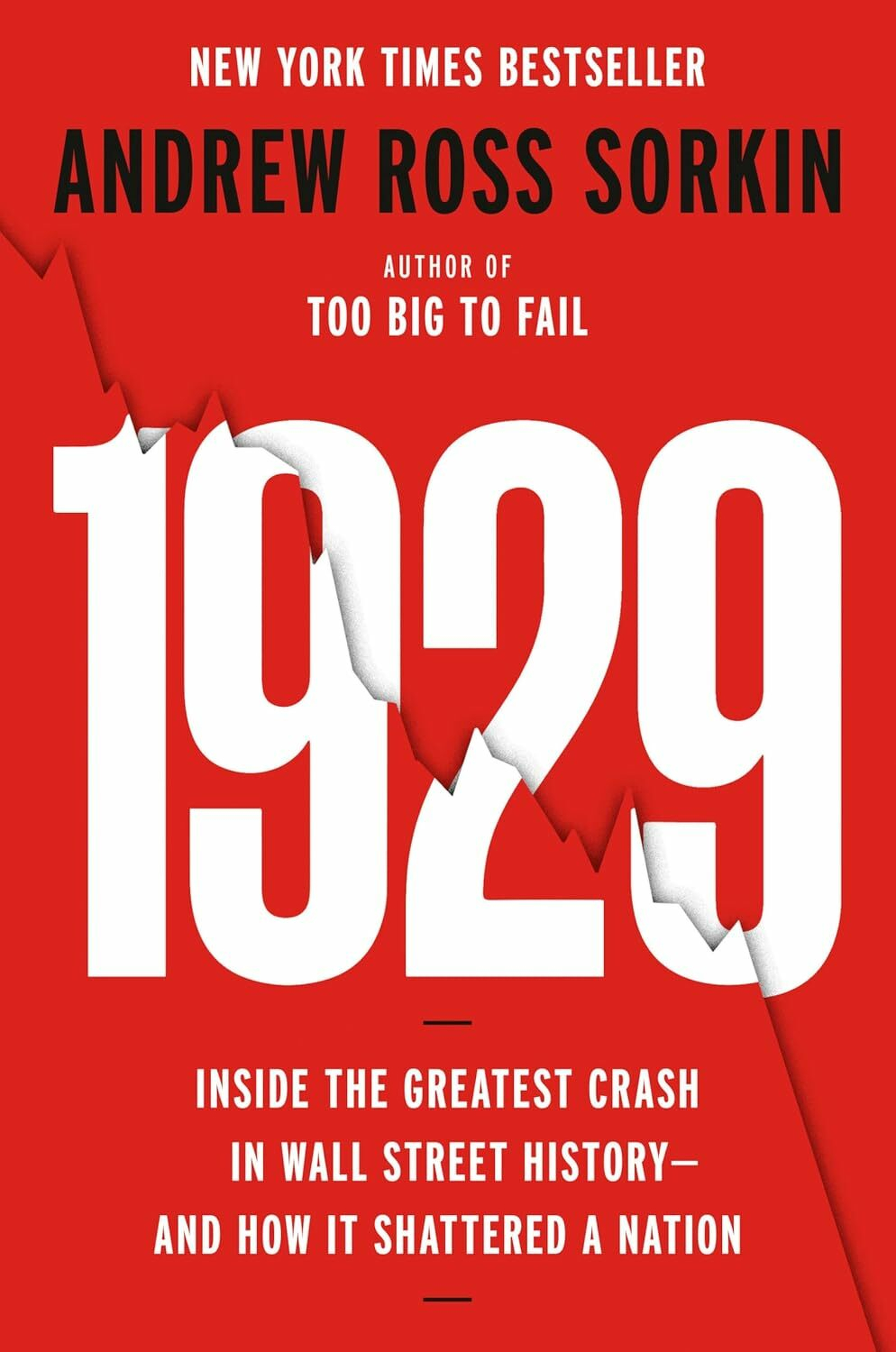
Auto-generated description: A red book cover titled 1929 features torn paper edges and text about the Wall Street crash, authored by Andrew Ross Sorkin.

Tim Conway (a.k.a. President of Vortex Industries Lloyd Adams) demonstrates the new child-safe feature of Vortex’s medicine bottle. 😀

Sounds can really help support concentration – I’ve experimented with and actively used various background sound sources over the years, including anything from Coffitivity, YouTube concentration music, Amazon Music tracks, radio stations online, etc.

A new one I’ve recently lit upon comes from the folks at reMarkable, makers of e-ink tablets and with a heavy emphasis on distraction-free creativity. So far, I’m really liking the options they’ve put together in their “Room to Think” page – options for when you need some upbeat background, to times you need more calming sounds, techno and nature, etc.

You may want to check it out at your next opportunity, and provide yourself some Room to Think.


Bonus: They’ve also been compiling resources, scientific studies, and advisors towards their product around the ‘slow think’ theme – You can find those compiled on their website under the Better Thinking page (and good to see a company looking how to free from distraction, rather than the many nowadays deliberating creating or at least adding to the distraction).

Been a fan of Ben Rector for a long time – He has a way of tapping into something underneath the surface in many of his songs, combined with a felicity of composition.

In this add-on release to his latest album “Richest Man in the World” (an album which, to my listening, moves in a different direction for him), he explores the often unspoken reality of the “unknown” inherent to the act of creating. It partly reminds me of Theodore Roosevelt’s famous excerpt “The Man in the Arena” and seems drawn from Rector’s own experience and stage in life.

I hope you enjoy it and it helps you get underneath the surface of life in an enlightening way too:


(Bonus: I hadn’t realized, or had forgotten, Roosevelt’s quote came from a longer speech he gave entitled “Citizenship in a Republic” at the Sorbonne in Paris on April 23, 1910. I was reading for the first time as I put this post together, and found myself spinning from many of his reflections in that speech. Well worth the read.)

Reflecting later on the moment, Cockburn wrote: “Since becoming a journalist, I had often heard the advice ‘to believe nothing until it has been officially denied.’ But despite this, even the ominous blandness of Mr. Lamont did not shake me into full awareness of what was going on.

Excerpt from “1929” by Sorkin describing one journalist’s remembrance from October 24 when a financial institution head tried to pan the crumbling market as ‘technical blip and not a fundamental issue’.

I don’t think I’ve previously heard the saying ‘to not believe anything until it’s been officially denied’ l, but I can see it being very appropriate to certain circumstances. :)

Although I can find his writing style somewhat overwrought, this December 23 opinion column by Armstrong Williams in The Baltimore Sun held some interesting observations about where we stand in America now:

“People get up, commute, grind through work, juggle kids and side hustles, scroll in bed until their eyes burn, then do it again tomorrow. They are surviving, but they are not living. …

“So what do we do? First, we need leaders willing to tell the truth about the cost-of-living crisis and the debt trap. …

“Second, we have to rebuild community on purpose. Policy can help … but it cannot substitute for the choice to be rooted. …

“Third, we must treat the mental health crisis as both a medical and a moral challenge. Therapy and medication can be lifesaving, but they cannot manufacture purpose. People need responsibilities that matter, relationships that endure, and a vision of life that goes beyond consumption and self-expression. Politics can make it easier or hard to build that kind of life, but it cannot replace the hard work of commitment, forgiveness, and self-discipline.

“Finally, we have to stop sprinting away from God and then wondering why everything feels empty. The American experiment was never meant to function on material prosperity alone. It assumed a people who believed they were accountable to something higher than their appetites and their politics. …

And the conclusion:

RIght now, too many Americans are white-knuckling their way through each month — nervous, numb, and spiritually adrift. Changing course will require more than a new policy or president. It will require rebuilding the financial, social, and spiritual foundations that make real life possible …”

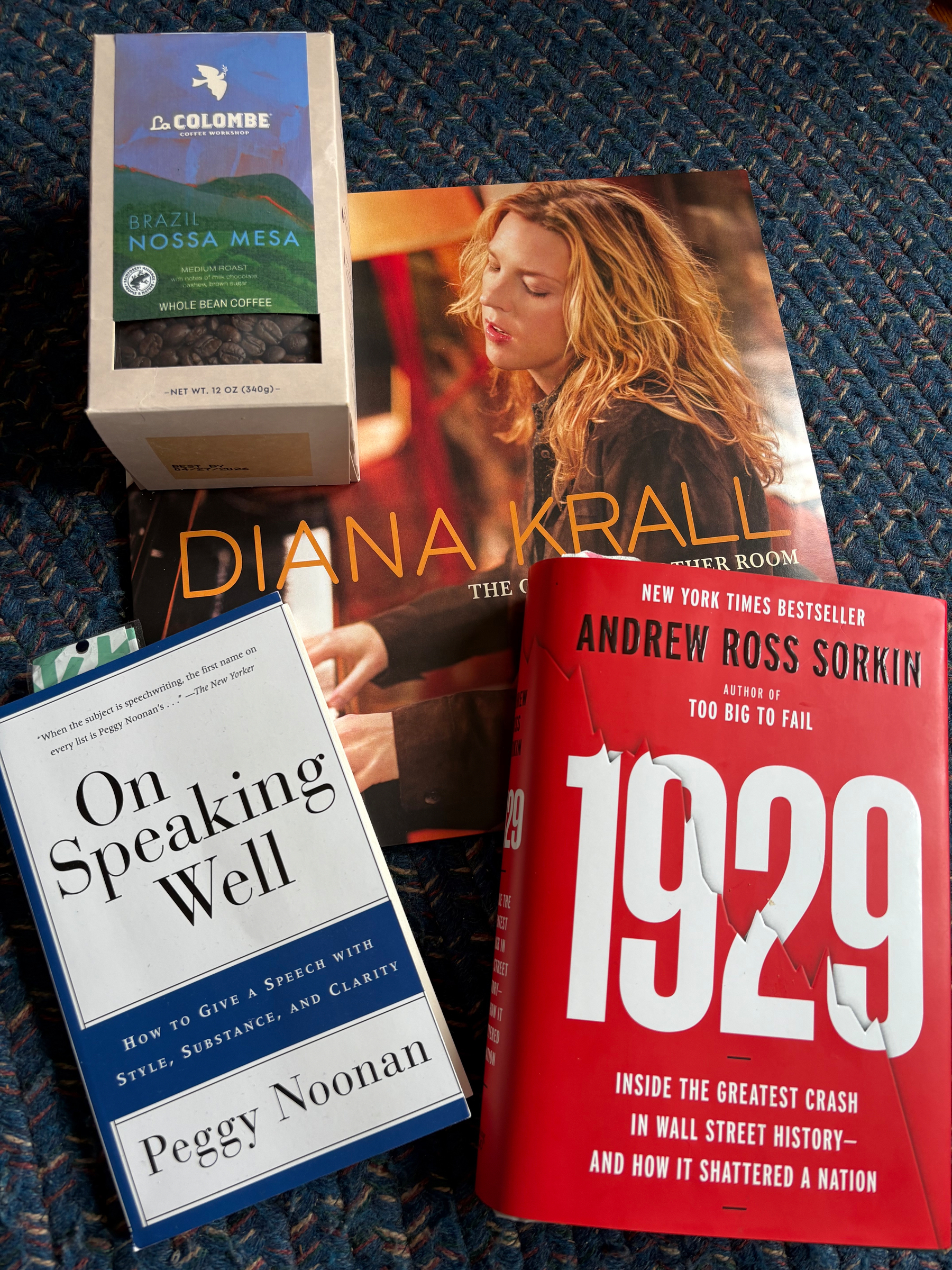
My Christmas haul this year 🙂

  • La Columbe Brazil Nossa Mesa

  • Diana Krall vinyl album, The Girl Next Door

  • “On Speaking Well” by Peggy Noonan

  • “1929” by Andrew Ross Sorkin … (not to be confused with, and of no relation to, Aaron Sorkin)

Auto-generated description: Coffee and books are arranged on a patterned surface, featuring titles by Diana Krall, Peggy Noonan, and Andrew Ross Sorkin.

Heard the author, Andrew Ross Sorkin, talking about his new book, 1929, on Fresh Air today – Sounds like a fascinating read (and not-so-surreptitiously suggested to the Mrs. as a Christmas present idea). ;)

We’re in the Advent season, which can be a mix-up of emotions since there’s excitement over the approaching Christmas celebration, but the primary thrust of Advent is really about a steady preparing of oneself to be in the right space for the day.

It’s hard not to put the cart before the horse. :)

This reflection by Fr. Mike Schmitz and Bishop Robert Barron is one of the strongest I’ve seen to make sense of the tension, and an encouragement to watch as part of your preparations. :)

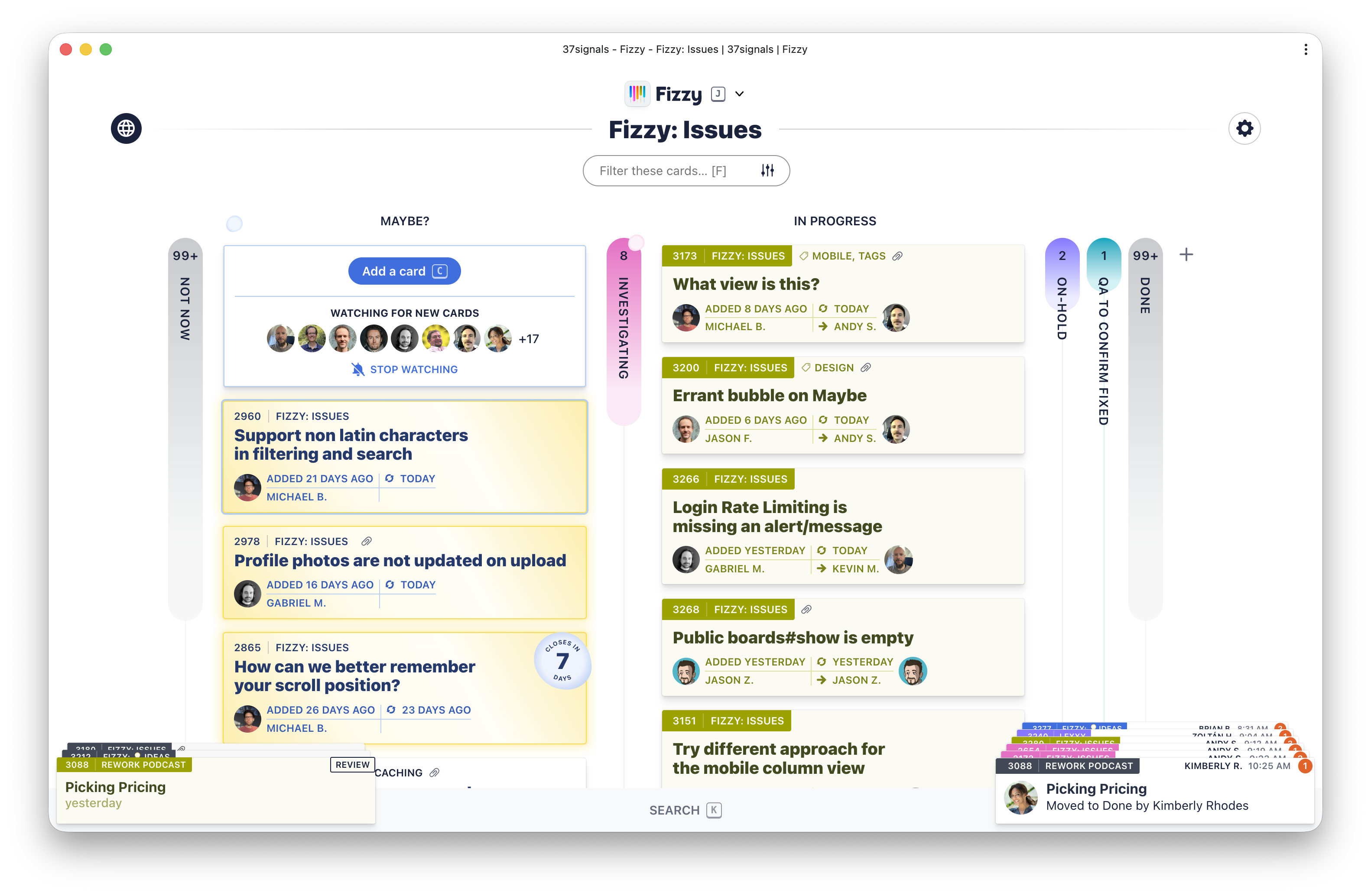
Interesting task/ project statuses referenced in Jason Fried’s launch of Fizzy, a streamlined Kanban task/ project manager:

  1. Not now
  2. Maybe?
  3. Investigating
  4. In progress
  5. On-hold
  6. QA to confirm fixed
  7. Done

That so many of the statuses are dedicated to states before the “work” even “begins” hadn’t really occurred to me, but seems to make so much sense – A lot of energy is really about which particular tasks to put energy to now: There always seems to be no shortage of tasks to take attention, but where do each of them stand relative to one another, and which one should actually come to the head of line right now, could probably be said to be ‘half the battle’.

So Task/ Project statuses should reflect this –

  • The: (a) I’ve got a great idea but I clearly know it’s not something for the immediate present;

  • The (b) This probably has legs, but not convinced it should supplant what else is going on right now?;

  • The (c) Let’s confirm there’s really something here before we roll-up our sleeves to work on it;

  • The (d) Okay, we’re working on it now and let’s get ’er done;

  • The (e) We shipped something but 9 times out of 10 there’s at least some tweaks that need to be made before it can be left less attended; and

  • The (f) Okay, this is done, we can remove it from our frontal lobe for now

That was cathartic even to type, and giving yourself the permissions enabled by each of these levels helps to further de-stress and support forward progress without fighting against your own psychology about what exactly your level of attention/ commitment is to a particular idea/ task/ project.

Phew.